Injury to the jaw or face
A blow or other injury can affect the jaw joint and nearby tissues.
Jaw symptoms can involve the joint, the muscles, or both. An evaluation can help identify what may be contributing and guide a treatment plan around your needs.
Temporomandibular disorders (TMD) include conditions involving the jaw joints, the muscles used to move the jaw, or both. Symptoms and contributing factors differ from person to person.
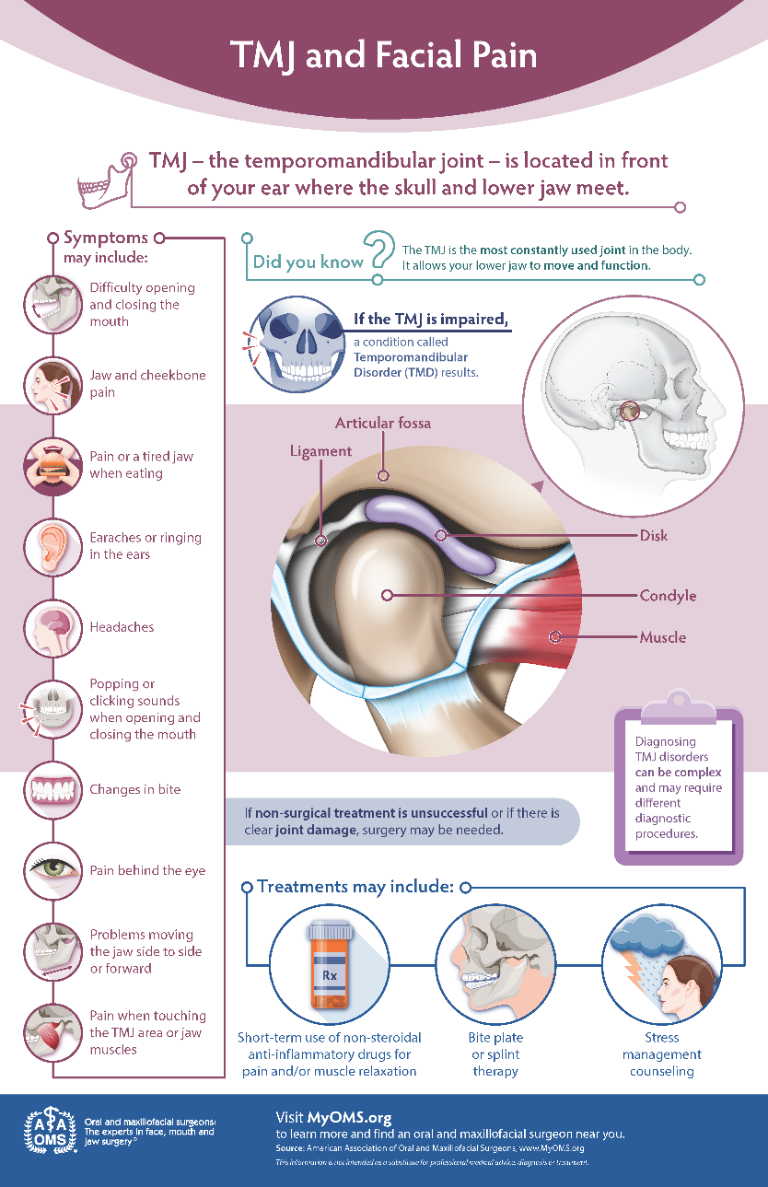 TMJ and Facial PainView infographic
Jaw-joint and muscle symptoms can have different contributors, and sometimes no single cause is clear.
A blow or other injury can affect the jaw joint and nearby tissues.
Repeated clenching or grinding can put extra strain on jaw muscles and joints. It may contribute to symptoms but may not be the primary factor.
Autoimmune and other inflammatory conditions, including rheumatoid arthritis, can affect the TMJ.
Hormones: Researchers are studying how sex hormones may affect pain sensitivity and joint tissues.
Infection: Infection of the jaw joint is uncommon but can cause serious inflammation.
Consider an evaluation if pain continues, jaw movement becomes limited, your jaw repeatedly locks, or symptoms interfere with eating or daily activities.
Your visit may include a review of your symptoms and health history, an examination of jaw movement, and imaging when appropriate. The goal is to understand the likely source before discussing treatment.
Your exam, symptoms, and goals shape our recommendations. When suitable, we start by discussing care that does not involve an operation.
Many concerns can be addressed without an operation. Depending on the diagnosis, care may include:
If your symptoms continue and you meet criteria for treatment, certain procedures may relieve pain or improve jaw function and help you recover faster than with open surgery.
The joint is rinsed using small needles.
A small camera and instruments are used to examine and treat selected problems inside the joint.
Surgery may be discussed when a specific structural problem has not improved with appropriate non-surgical or minimally invasive care. Whether it is suitable depends on your evaluation. Your surgeon will review the options, possible risks, and alternatives with you.
Not necessarily. Clicking without pain or difficulty moving your jaw may not need treatment. If it is painful, limits movement, or comes with locking, an evaluation can help identify what is going on.
Jaw-joint or muscle problems can contribute to facial pain or some headaches, but headaches have many possible causes. We can assess whether the jaw may be involved and coordinate with a neurologist when helpful.
The decision depends on your symptoms, examination, and imaging when needed. Surgery is considered for selected problems that have not improved with appropriate non-surgical care. Your surgeon will discuss alternatives and risks as part of that conversation.
We review your symptoms and health history, examine jaw movement and related areas, and decide whether imaging would be useful. This helps guide next steps and whether another clinician should be involved.
Contact our office to discuss whether an evaluation with an oral and maxillofacial surgeon may be appropriate.